Official introduction
This page is designed as a full commercial service guide for international clients that need Hull and Machinery insurance for vessels trading in Iranian waters and Persian Gulf waters. It is intentionally different from a general vessel-insurance page or a broad marine-risk overview. Instead, it focuses specifically on the physical marine asset side of the risk, meaning the hull, machinery, equipment, and marine damage exposure that can arise during navigation, maneuvering, port calls, coastal movement, anchorage operations, and regional trading patterns.
That distinction matters because H&M is not the same as P&I. H&M usually addresses physical loss or damage to the vessel and its machinery. By contrast, P&I (Protection & Indemnity) usually deals with third-party marine liabilities. Therefore, international shipowners and operators should not expect one policy to do the work of both. They should review H&M and P&I together, but they should keep their roles clear from the beginning.
Accordingly, this guide explains what H&M means in practice, how the placement process works in Iran, what documents underwriters usually need, what affects pricing, what mistakes should be avoided, and how marine support can be structured for vessels operating in Iranian waters and across the Persian Gulf.
Who this service is for
This service is intended for shipowners, operators, tanker interests, commercial vessel managers, charter-linked stakeholders, marine brokers, logistics groups, port-linked operators, and international companies whose vessels call at Iranian ports, navigate in Iranian waters, or trade within Persian Gulf waters. It is also relevant for clients that need a local route for marine placement support when the vessel profile, machinery condition, navigation area, or port operations require closer underwriting attention.
In practice, these clients often need more than one marine line at the same time. A vessel may need Hull & Machinery insurance, P&I (Protection & Indemnity), vessel liability review, and sometimes cargo insurance or broader reinsurance discussion as part of the overall structure.
Therefore, this page is most useful for clients that need a clear, commercially structured explanation of H&M itself, with proper attention to Iranian waters and the Persian Gulf trading environment.
What Hull and Machinery insurance covers
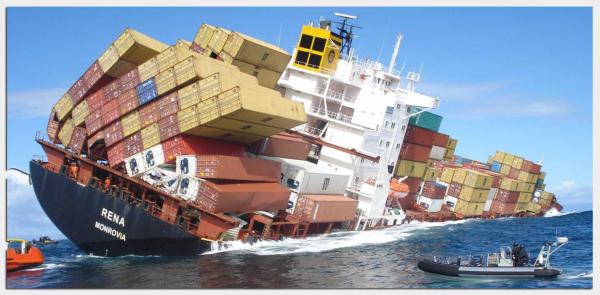
Hull and Machinery insurance usually focuses on physical loss of or damage to the insured vessel and its machinery. In practical terms, that can include damage arising from navigation incidents, collision-related physical loss, grounding, machinery failure events within policy scope, heavy weather effects, fire, or other covered marine perils depending on the wording and underwriting basis. Therefore, H&M is usually the central physical asset policy for the vessel itself.
However, international clients should not assume that every marine risk automatically falls inside H&M. The exact response depends on policy wording, conditions, deductibles, insured value, machinery details, navigational use, and the facts of the incident. Accordingly, H&M should be reviewed together with P&I so that physical vessel damage and third-party marine liability are not confused. That distinction is especially important in Iranian waters and Persian Gulf waters where commercial shipping exposure can involve ports, anchorage, pilotage, coastal movement, and tanker-related operations.
As a result, H&M should be structured as part of a wider marine program, but its own physical-damage function should remain clearly defined from the start.
Why H&M matters for Iranian waters and Persian Gulf waters
Vessel trading patterns in Iranian waters and Persian Gulf waters create practical underwriting questions that international clients should address early. Underwriters usually want to understand where the vessel trades, how often it calls, what type of cargo or service it supports, the port and anchorage profile, the navigational routine, and whether the vessel is exposed to higher mechanical strain, coastal maneuvering complexity, or region-specific operating patterns. Therefore, H&M in this environment should be reviewed with careful attention to actual use, not only vessel category.
This is one reason why H&M is commercially important for tankers, service vessels, commercial craft, and regional trading ships entering or operating around Iran and the Persian Gulf. The issue is not just whether the vessel is insured. The issue is whether the policy structure reflects the real navigational area and asset condition. Consequently, clients often review supporting pages such as Navigating Maritime Risks: H&M, Different Vessel Policies, and Vessel and Aircraft Insurance in Iran while planning the structure.
Accordingly, a region-specific review is usually more useful than relying on a generic marine template.
How H&M and P&I work together
For marine clients, one of the most important distinctions is the difference between H&M and P&I. H&M usually responds to physical loss or damage to the vessel and its machinery. P&I (Protection & Indemnity) usually addresses third-party marine liabilities. Therefore, they are connected, but they are not interchangeable. If a client expects one section to do the work of the other, the placement can become unclear before a claim even occurs.
That is why serious marine programs often review both lines together from the beginning. For example, a vessel trading in Persian Gulf waters may need clear alignment between H&M cover and P&I cover, especially when port operations, marine movement, collision scenarios, or third-party marine responsibilities arise. Accordingly, clients should also consider related pages such as Vessel Liability and P&I for Iranian and International Waters where relevant.
As a result, the strongest marine structure is usually the one that keeps the function of each policy clear while ensuring they fit together commercially.
Process in Iran for placement and policy issuance
The process usually begins with vessel profiling. First, the client should define the vessel type, trading area, Iranian waters exposure, Persian Gulf navigation pattern, age, flag, insured value, machinery profile, and operating routine. Then, the submission should clarify whether the placement is strictly H&M-focused or whether P&I, marine liability, or cargo-related sections should also be reviewed. After that, the file can be structured for quotation and presented to Iranian insurance companies through a recognized local route.
Once quotations are under review, the process may involve clarification of navigation limits, vessel condition, values, machinery records, deductibles, and any endorsements or wording points relevant to the operating area. After placement, policy issuance, endorsements, renewals, and claims-related communication can be supported as required. Therefore, the real value of local support is not only access to insurers. It is also the ability to organize marine information in a practical form that matches the underwriting discussion.
Clients often use direct contact, Access Insurance Markets, and Our Role as supporting references when starting this process.
Required documents for underwriting
Underwriters usually need more than the vessel name and insured value. A stronger H&M submission often includes vessel particulars, year built, class and condition details where available, insured values, machinery information, navigation area, recent operating history, claims history if available, ownership or management details, and a clear description of how the vessel trades in Iranian waters or Persian Gulf waters. Therefore, documentation quality is one of the main drivers of underwriting clarity.
Where the client also needs related marine coverage, the file may need additional information for P&I / H&M request review, cargo support, or vessel-liability alignment. In some cases, port call history, repair details, technical records, and route patterns may also influence how efficiently the placement moves. Accordingly, a well-organized file usually improves both speed and accuracy in quotation discussions.
As a result, the best first step is usually to prepare a disciplined marine file before requesting formal market review.
Underwriting and pricing factors
Pricing depends on far more than vessel value. Underwriters may consider vessel age, construction, maintenance condition, machinery profile, class status where relevant, claims history, navigational area, Persian Gulf exposure pattern, Iranian waters usage, port-call frequency, type of service, and the quality of the underwriting submission. Therefore, two vessels with similar declared values may still receive different terms if their operating realities differ.
Moreover, pricing is affected by how clearly the file explains the vessel’s real use. If the submission leaves the trading area vague, or if it does not show whether the vessel operates in coastal, port, tanker-linked, or wider Gulf patterns, the underwriter may adopt more conservative assumptions. By contrast, a precise file usually supports a more focused discussion. That does not guarantee a lower premium, but it often improves underwriting confidence and reduces avoidable delay.
For larger or capacity-sensitive cases, broader structuring may also involve reinsurance review as part of the overall marine placement strategy.
Common risks and mistakes international clients should avoid
One common mistake is confusing H&M with P&I. Another is assuming a generic marine policy automatically reflects Iranian waters or Persian Gulf trading patterns. A third is submitting a vessel only by name and value without explaining machinery condition, route profile, port exposure, or the actual commercial use of the ship. These issues can weaken the underwriting discussion before terms are even offered.
Clients also create avoidable problems when they understate navigational detail, ignore machinery history, fail to align physical vessel cover with liability cover, or wait until after a claim scenario is discussed to clarify the role of P&I and H&M. Consequently, the safest approach is to structure the marine placement around the real operating profile of the vessel from the beginning. That is also why clients often review claim settlement support, updated regulations, and brokerage code information when planning marine placement in Iran.
Accordingly, the strongest H&M placement is usually the one built on a realistic vessel profile, not on a minimal request for price only.
| Marine issue |
Why it matters |
Typical insurance focus |
| Physical damage to vessel |
Core marine asset exposure |
H&M (Hull & Machinery) |
| Third-party marine liability |
Separate from physical vessel loss |
P&I (Protection & Indemnity) |
| Iranian waters trading profile |
Affects underwriting view and wording discussion |
Navigation area and vessel-use review |
| Persian Gulf port and coastal operations |
Can influence movement and exposure pattern |
Operational and port-risk review |
| Machinery condition and maintenance |
Key factor in technical underwriting |
Machinery profile, history, and survey records |
General inquiry
If your vessel trades in Iranian waters or Persian Gulf waters and you need H&M guidance, we can help review the structure before placement begins.
Contact our marine insurance team
Specialized consultation
Need a clearer structure for H&M, P&I, vessel liability, or a tanker-related marine placement connected to Iran? We can help map the correct pathway.
Request specialized consultation
Request / quote submission
If you already have vessel particulars, machinery details, trading-area information, and supporting marine documents, you can move directly into the request stage.
Start your H&M request
Related internal pages
Frequently asked questions
What does Hull and Machinery insurance usually cover?
Hull and Machinery insurance usually focuses on physical loss of or damage to the vessel and its machinery, subject to the wording, conditions, deductibles, and underwriting basis of the policy.
Can you arrange H&M insurance from Iranian insurance companies?
Yes. We can arrange / issue all kinds of insurance policies from Iranian insurance companies, including marine classes, subject to underwriting acceptance, vessel details, and applicable local requirements.
Is H&M the same as P&I?
No. H&M usually deals with physical loss or damage to the vessel and its machinery, while P&I (Protection & Indemnity) usually addresses third-party marine liabilities.
Why does trading area matter for H&M in Iranian waters and Persian Gulf waters?
Because trading area affects how the underwriter evaluates navigational exposure, operating pattern, port use, coastal movement, and machinery stress. Therefore, it is a central underwriting factor.
What information do underwriters usually need first?
They often need vessel particulars, year built, values, machinery details, navigation area, operating profile, ownership or management details, and prior claims information where available.
Can tanker operations in Persian Gulf waters require both H&M and P&I review?
Yes. Many tanker or vessel operations require a coordinated review of H&M for physical vessel loss and P&I for marine liability exposure.
Does vessel age affect H&M pricing?
Yes. Vessel age can affect underwriting view, especially when combined with machinery condition, maintenance history, and the actual navigation profile.
Why is machinery information so important?
Because H&M is not only about the hull. Machinery condition, maintenance, and technical history can materially affect the underwriting assessment and the claims discussion.
Can a client request only H&M without broader marine support?
Yes, although many clients benefit from reviewing H&M alongside P&I, vessel liability, and cargo-related exposure so the wider marine structure remains coherent.
What are the most common mistakes in H&M placement?
Common mistakes include confusing H&M with P&I, giving incomplete vessel information, ignoring trading-area detail, and failing to explain the real operating profile of the vessel.
Can you support endorsements, renewals, and claims communication after placement?
Yes. We can support the process beyond quotation, including policy issuance coordination, endorsements, renewals, and claims-related communication.
Is reinsurance ever relevant for marine H&M placements?
For larger or capacity-sensitive marine cases, yes. Reinsurance can become relevant where the broader structuring of the risk requires it.
What is the best first step for an international vessel operator?
The best first step is to prepare vessel particulars, values, machinery information, navigation area details, claims history if available, and the intended Iranian waters or Persian Gulf trading profile before requesting review.
Conclusion
Hull and Machinery insurance for Iranian waters and Persian Gulf waters should be reviewed as a serious marine asset-protection policy, not as a generic vessel form. It works best when the structure reflects the real vessel profile, machinery condition, navigation area, and the separate but related role of P&I. Therefore, international clients that build H&M around the actual operating pattern of the vessel usually create a stronger and more practical marine insurance pathway in Iran.